
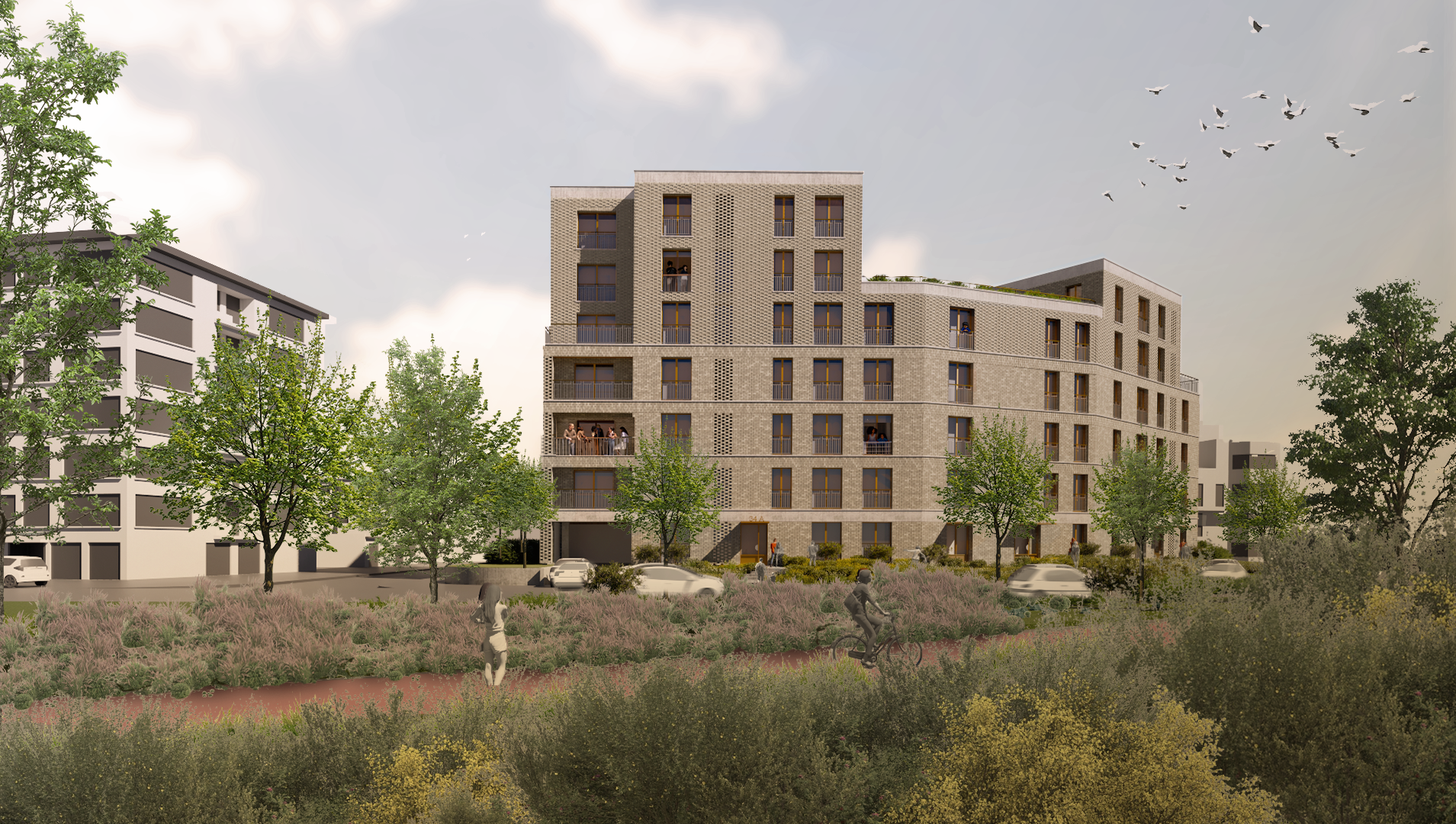
Royal House
An existing 1980s office building, located in the residential neighborhood surrounding Nachtegalenpark and Park Den Brandt, is being transformed into a 34-unit residential project.
Project Reconversion, Residential
Location Antwerp, BE
Client
Brody
Type
Commission
Area
3.963 m² above ground
2.010 m² below ground
Team SMAK Architects
Atlas Engineering
BM Engineering
Avantgarden
Status Permit submitted in 2025
Volume study
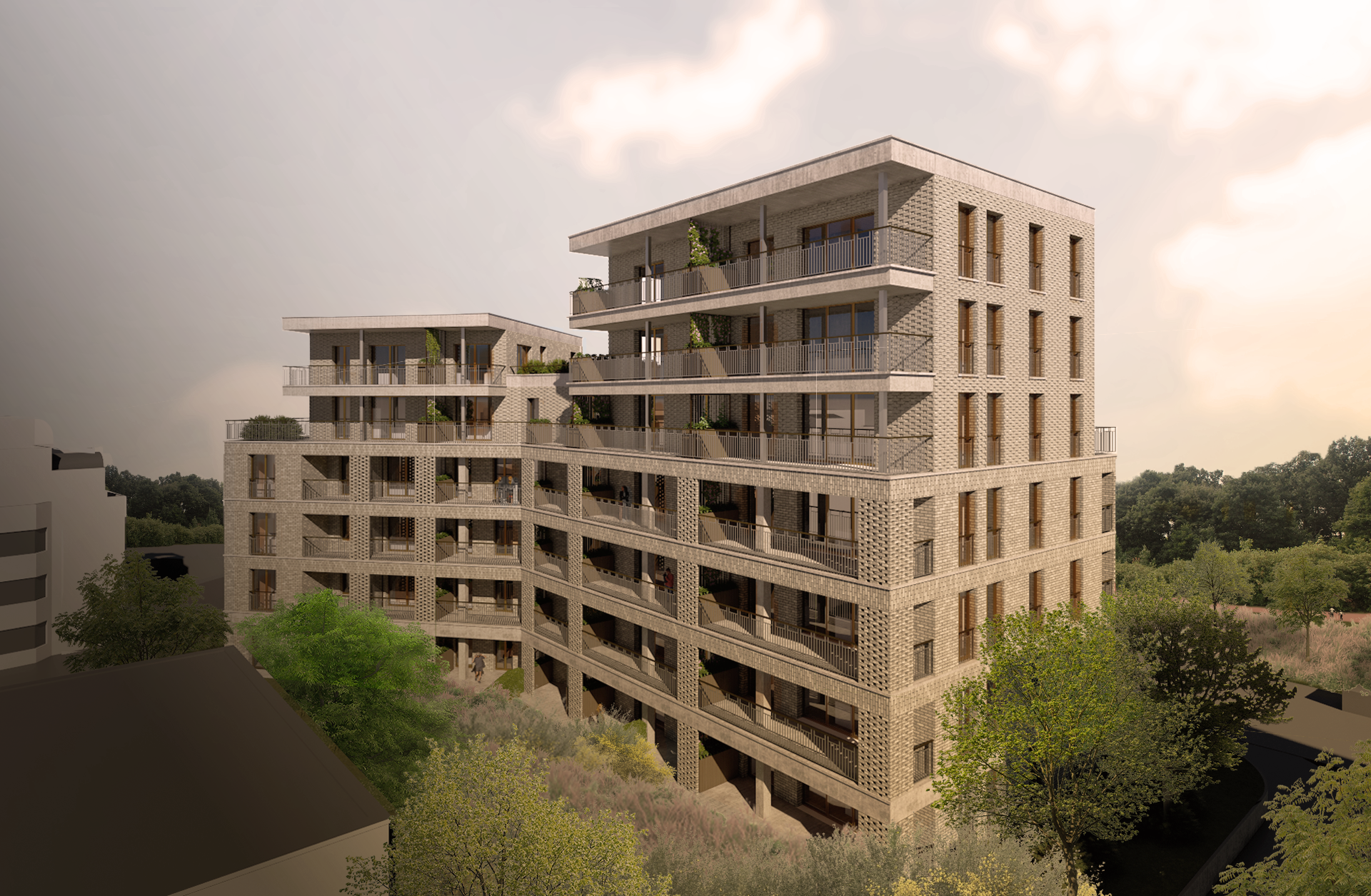
While the existing building consists of five floors, the new design removes portions of the deep office floor plans to create distance from the neighbours and provide light to dual-aspect apartments.
Living rooms with generous terraces are all facing south. The bike shed occupies a prominent position on the ground floor, while car parking is situated in the existing basement.
The set-back upper floor is replaced by a superstructure as an accent on the corners of the volume. Centrally, only one additional floor is added, resulting in a varied urban profile and a gentle transition to the surroundings.
The terraces are designed within the main volume. This brings a calmness to the facade and creates additional distance to the surrounding residential environment while still remaining open.
The result is a less closed, less massive volume that integrates into the existing urban context.

Preservation of the Existing Load-Bearing Structure
The design is based on maximum reuse of the existing load-bearing structure: a column-floor system where the columns are recessed from the facade. The basement levels are fully preserved. Part of the existing circulation core is integrated into the new design and supplemented with two additional new cores to realise the dual-aspect flats.
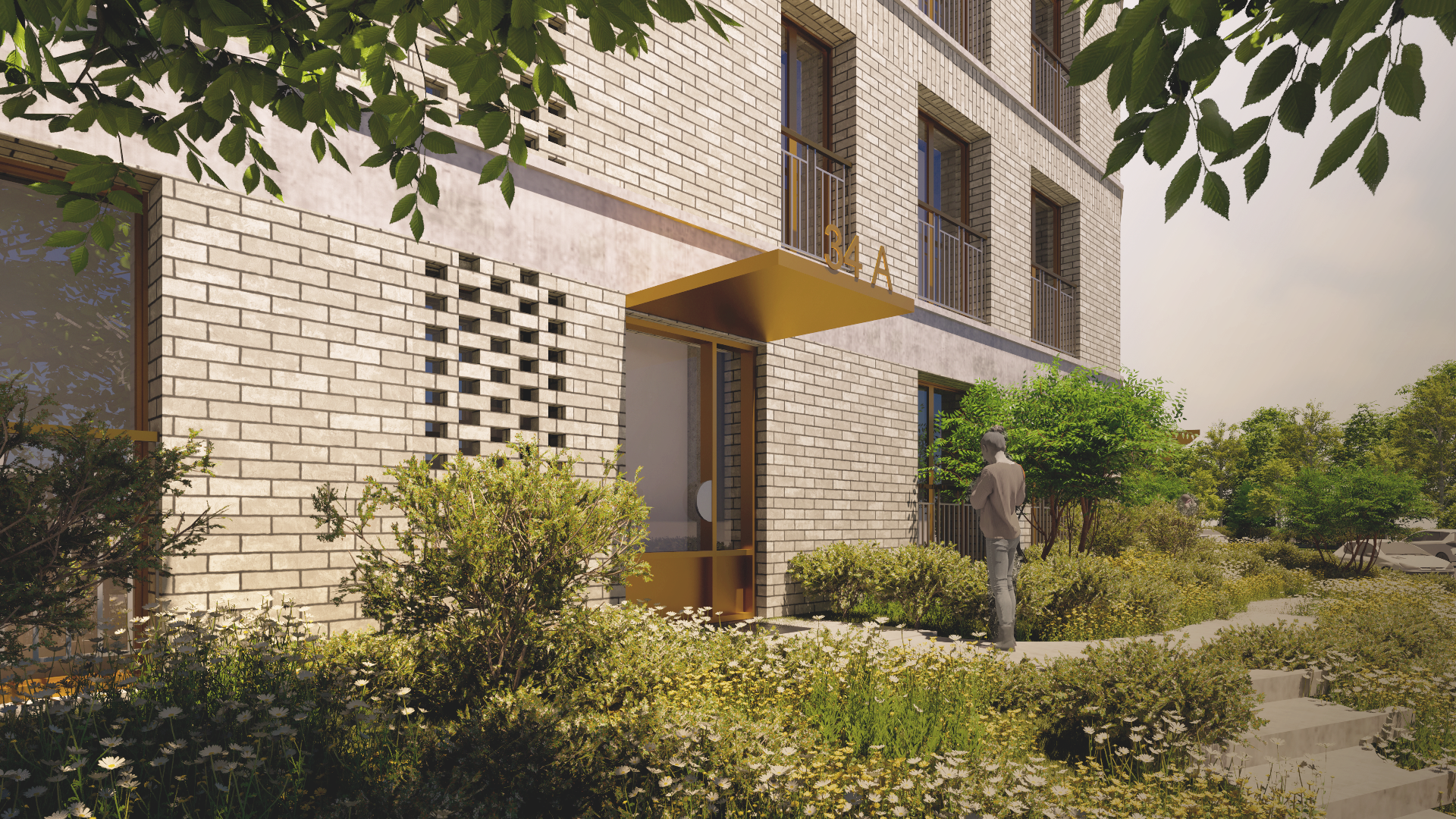
The building retains its main entrance on Coremansstraat. In total, there are three entrances, giving the street facade an open and accessible appearance.
The ground-floor apartments are through-units with south-facing gardens and private outdoor spaces. The upper apartments are also designed as through-units. The bedrooms are located on the street side, with smaller windows to promote acoustic comfort relative to the Ring. The living spaces face south and benefit from light, views of greenery, and less noise pollution thanks to their position away from the Ring.
Design process
The design is based on preserving the main structure of the plinth, demolishing the upper floor, and adding an extension through a new superstructure. The challenge lies in carefully integrating the existing and new structure by experimenting with form and material.
The existing plinth is accentuated as a base with continuous concrete bands on each floor, a neutral brickwork bond, and specific masonry details. The superstructure distinguishes itself through a distinct brick structure and detailing that emphasizes the verticality of the building.
Architecturally, a dialogue is established between the horizontality of the existing building and the verticality of the newly added volumes. The brick facades are solid towards the north and the city, yet open up with claustra detailing in the terraces towards the courtyards and the south.