
Why not only schools:
Blurring boundaries between education and housing
Research project into the co-location of schools and housing

Gustav
Magnusson
Malmö Urban planning Department, Malmö (SE)

Jack
Harvie-Clark
Acoustic consultant, advisor to Government departments, (UK)
Sebastian
Ekstam
Former head of property management Malmö City preschools, Malmö (SE)
Goal of the study
In an era of rapid urbanization, land scarcity, and widening socio-economic divides, the traditional school - conceived as a self-contained, single-use building - is no longer sufficient. Schools today must evolve to address not only the changing needs of learners, but also the broader challenges of urban communities.
This study explores how integrating educational spaces with other essential urban functions - particularly housing - can contribute to more inclusive, adaptable, and civic-oriented neighborhoods. While co-location strategies involving public functions like libraries, health centers, and sports facilities are gaining traction in cities globally, the integration of schools and housing remains underexplored, both in theory and in practice.
Notable built examples exist in Belgium, the Netherlands, and the UK, yet there is still much to be understood - from best practices to risks, policy barriers, and long-term impacts. This represents a valuable research gap and an opportunity to build a more comprehensive framework that connects learning environments with the complexities of urban development
At the same time, the housing crisis - marked by shortages, affordability gaps, and spatial inequality - has become one of the most urgent challenges across Europe and the wider Western world.
By focusing specifically on education & housing co-location models, this study aims to address two pressing public needs through a unified spatial and policy lens. It asks:
‘’How can learning environments and housing not only coexist, but actively reinforce one another - socially, spatially, and economically?’’
Our objective is both analytical and aspirational. We draw from interdisciplinary research and real-world projects to develop a framework for planning, design, and governance innovation. The ultimate goal is to produce practical tools and strategic insights that can assist municipalities, designers, developers, and educators in rethinking the role of schools - and housing - as co-anchors of more equitable, resilient, and future-facing cities.
This study also serves as a call to imagination: offering tangible case studies, transferable principles, and bold ideas to help stakeholders envision new possibilities for collaboration, land use, and civic infrastructure.
Co-producing Alternative Urban Futures through Experimental Urbanism - Symposium
On the 15th of january, Mathias introduced the study on an Experimental Urbanism Symposium at the Free University of Brussels (VUB-ULB).
Organised by Prof Bas van Heur (VUB-ULB), Dr Georgiana Varna (Newcastle University) and Dr Michael Crilly (Northumbria University), the symposium invited an international array of speakers to debate and discuss Experimental Urbanism.
Abstract
Education lies at the heart of civic life. Yet across many urban areas, schools remain physically and socially disconnected from their communities - used intensively for a few hours each day, and underutilized the rest of the time. Meanwhile, cities are facing an unprecedented affordable housing crisis, driven by rising land costs, shrinking public budgets, and socio-spatial fragmentation.
This study examines the potential of co-locating schools and housing, challenging the longstanding separation of these core public functions. It reimagines the school not simply as a place of learning, but as a shared civic resource - a site of belonging, intergenerational exchange, and everyday public life.
Focusing on education–housing integration as a distinct and under-addressed co-location strategy, we explore how hybrid programs can unlock new value - socially, spatially, and financially. By combining case studies from across Europe, stakeholder interviews, and policy analysis, the study investigates both the opportunities and obstacles of these models: design strategies, economic logics, regulatory gaps, and governance structures.
Importantly, while there is a growing trend toward co-location in school design - often involving libraries, gyms, or community centers - this research makes the case for a more urgent typological pairing: schools and housing. Housing shortages are not only a housing problem. They are an urban equity and infrastructure problem. In this light, schools can become platforms for integrated development, helping cities address intersecting needs with greater spatial and financial efficiency.
The study defines key principles, extracts design intelligence from real examples, and proposes a toolkit for future implementation. It is aimed at architects, planners, educators, developers, and public officials committed to rethinking how schools can contribute to the civic and spatial health of cities - now and into the future.
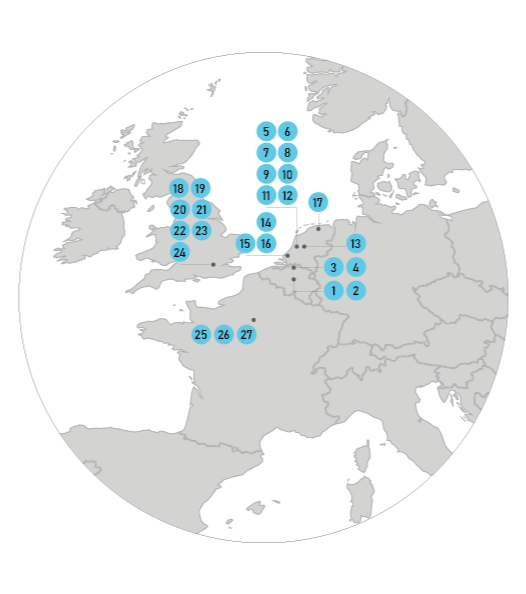
Case studies
1.
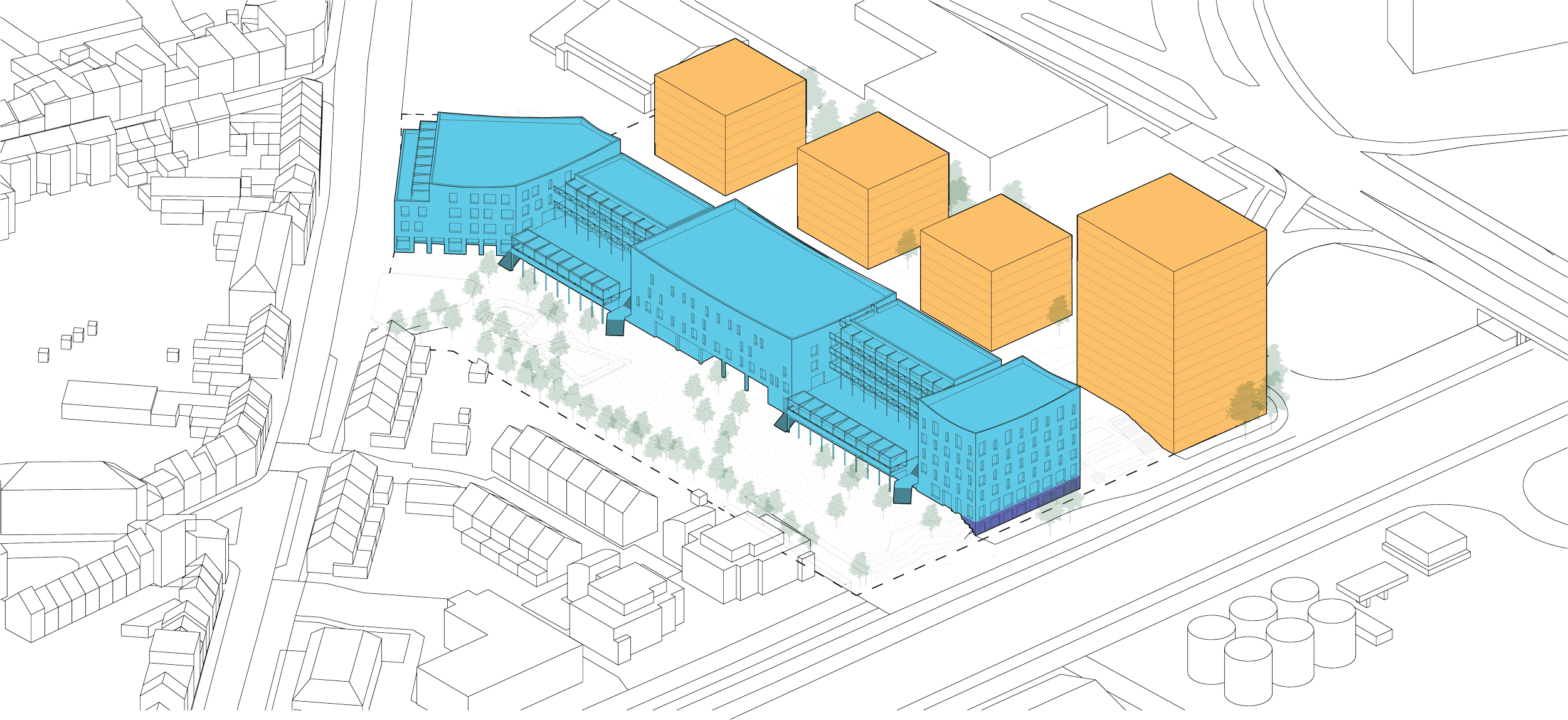
2.
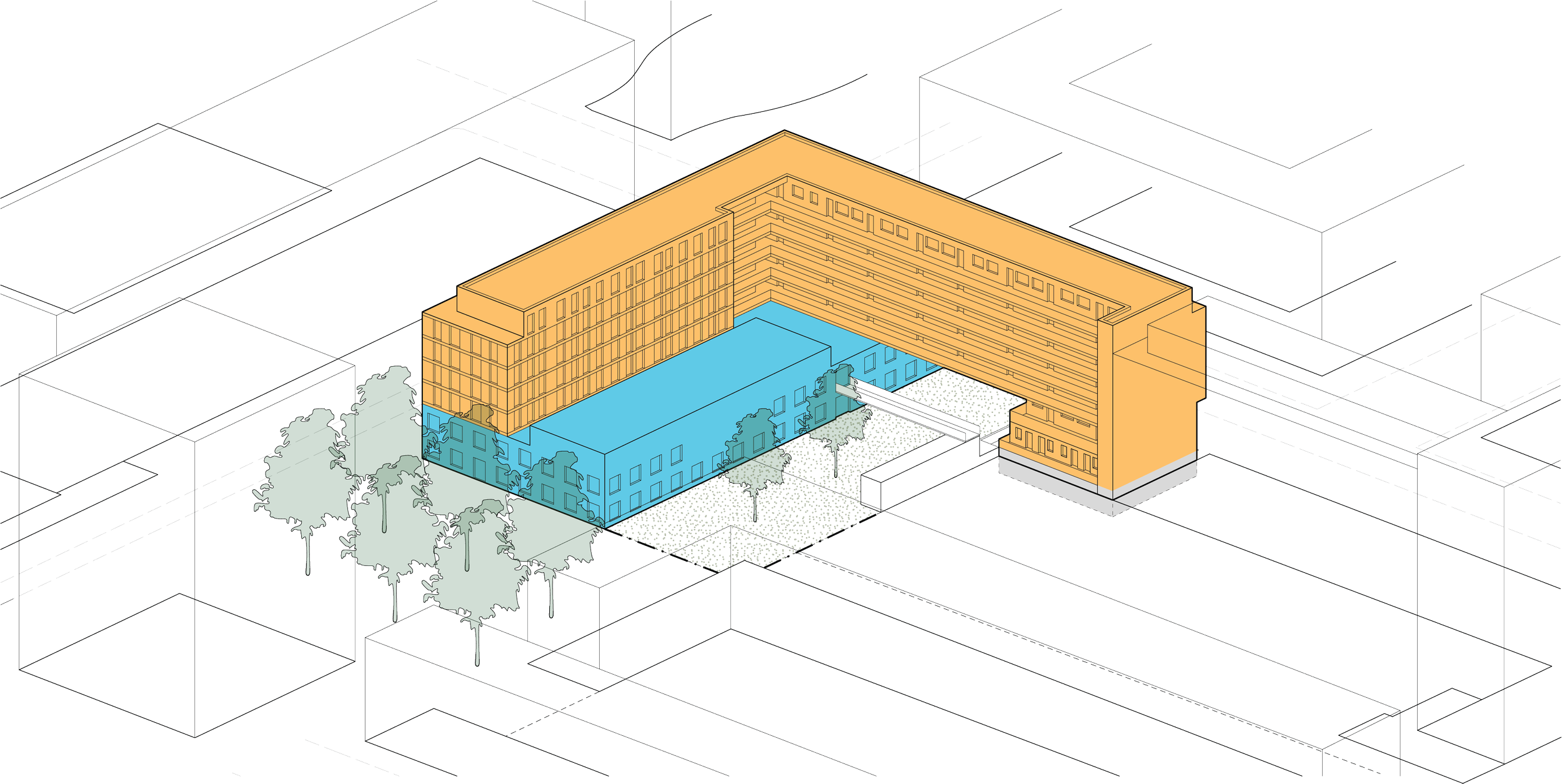
3.
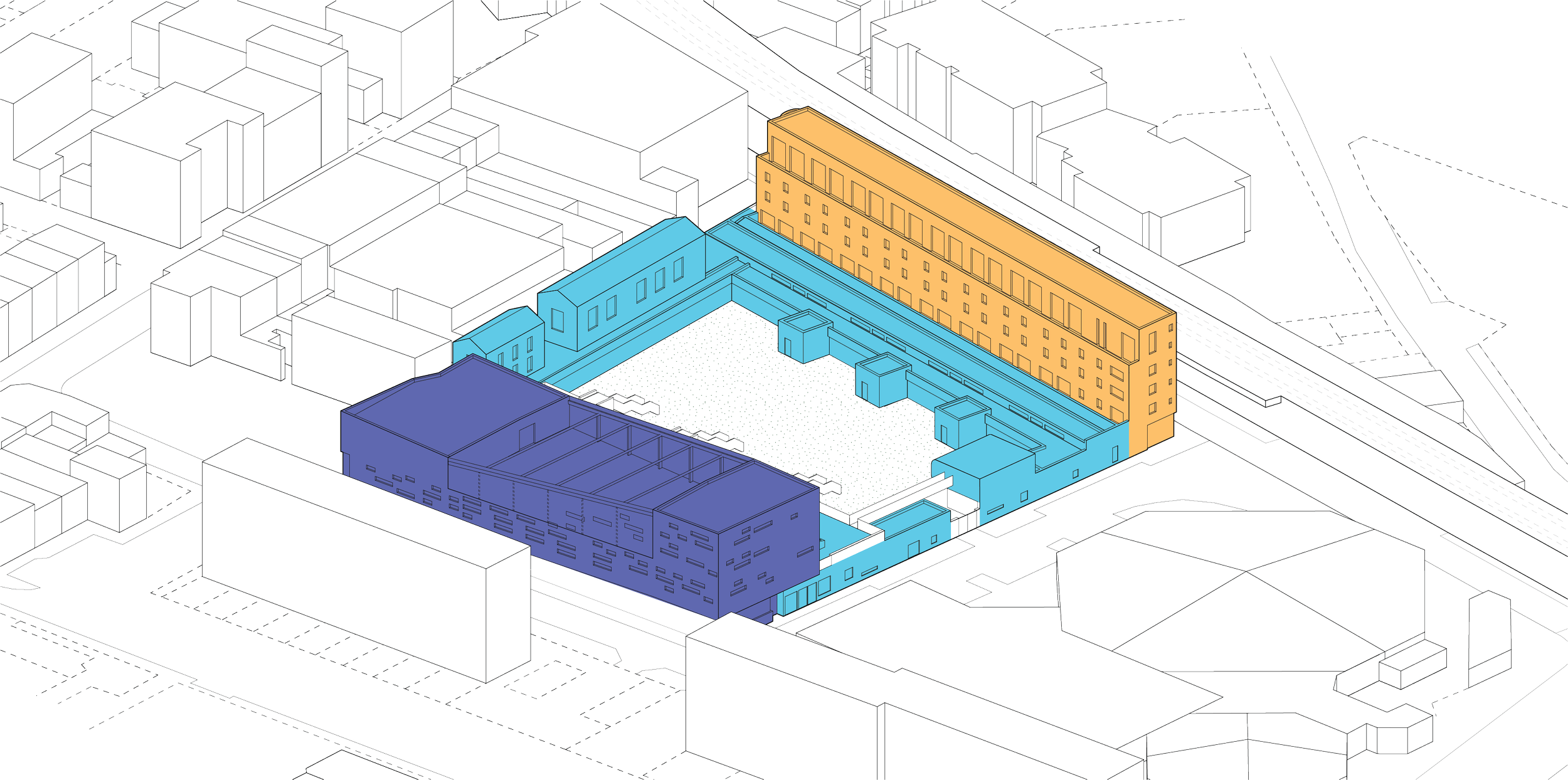
4.
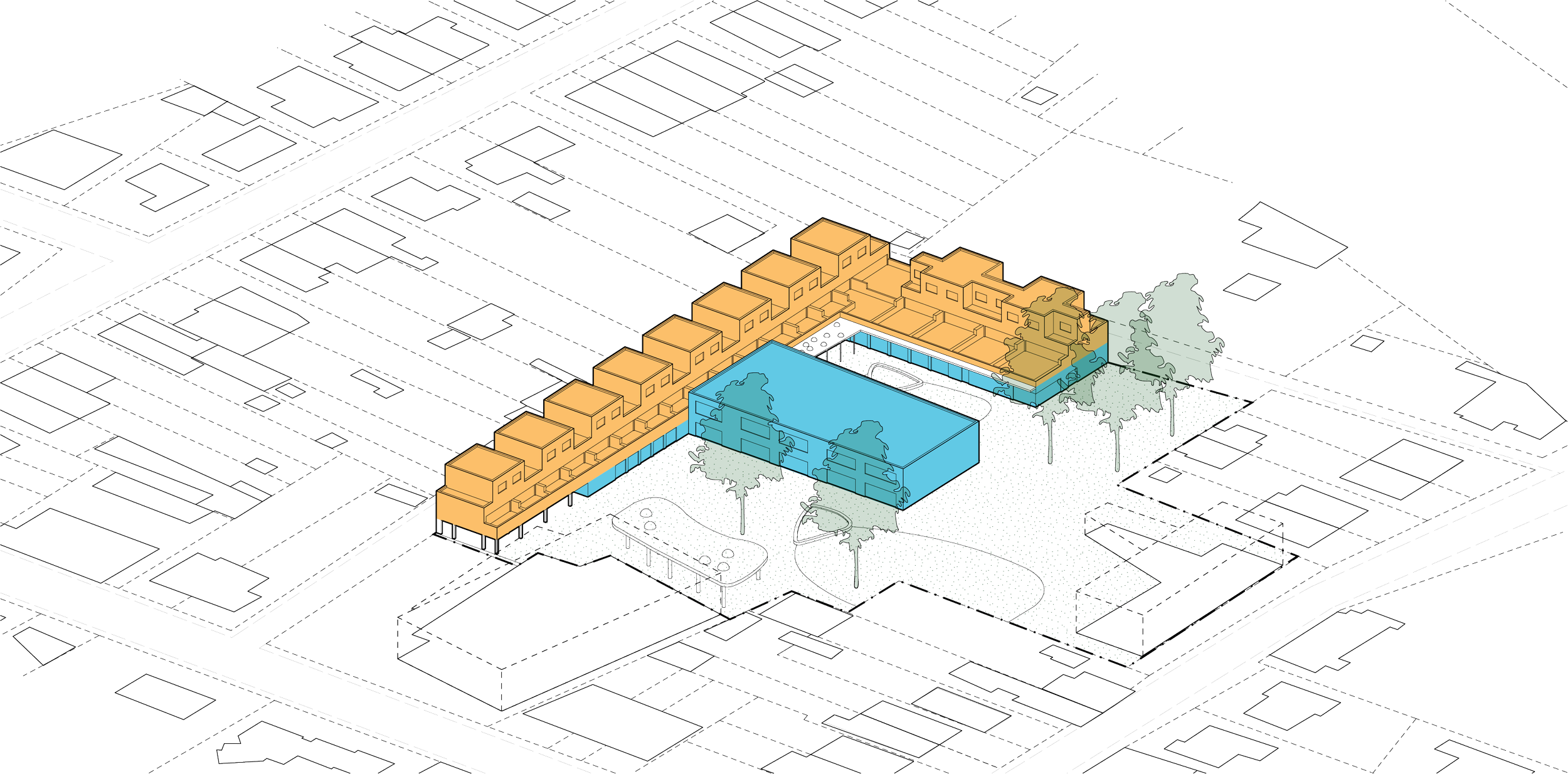
5.
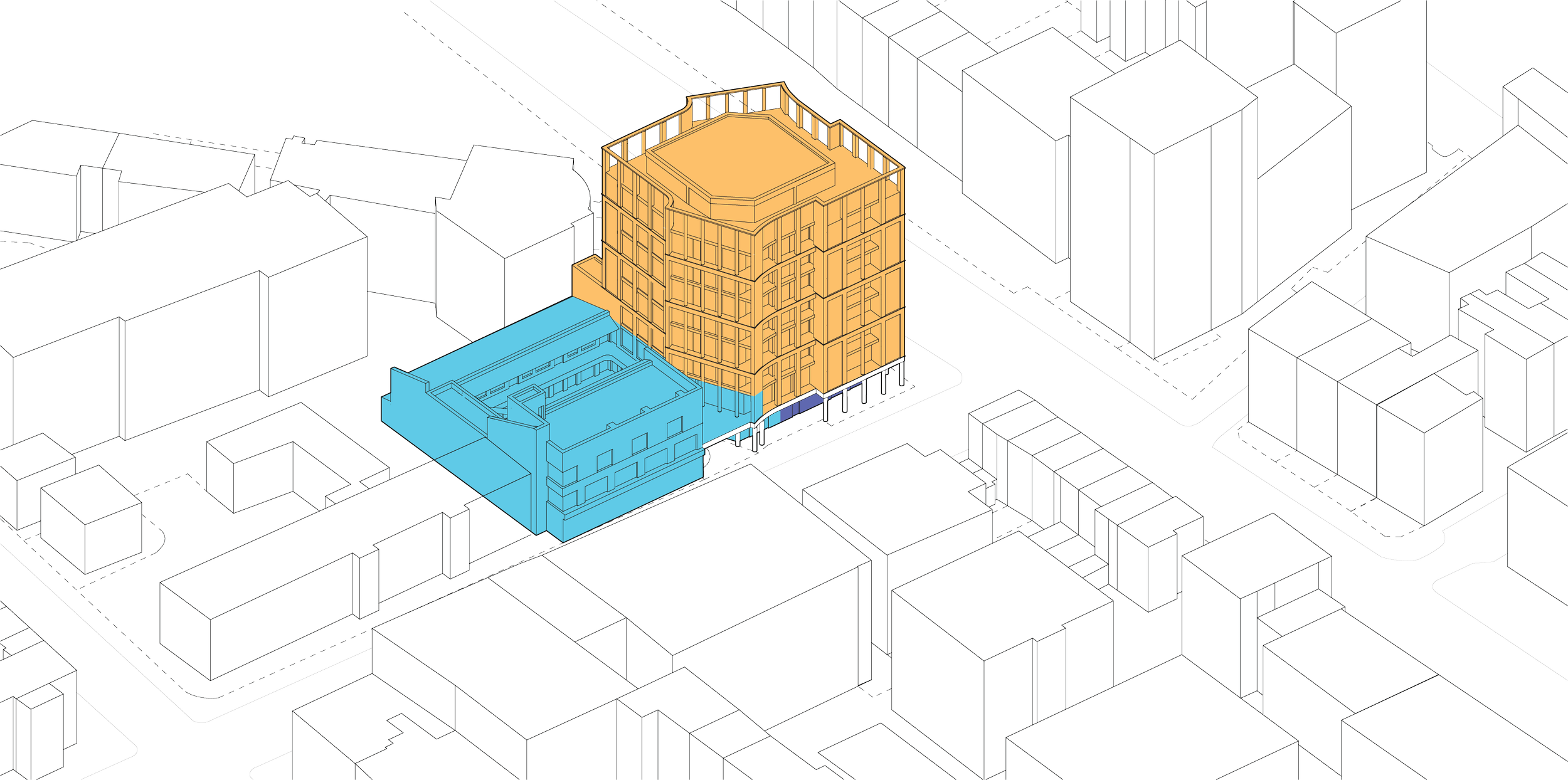
Campus Deleers (BE) - SMAK Architects
Fiep Westendrorpschool - Paul de Ruiter Architects
Tidemill Academy (UK) - Pollard Thomas Edwards architects
Molenveld (BE) - ABV+architecten
Hackney New primary School (UK) - Henley Halebrown
