College O.-L.-V.-ten-Doorn Eeklo
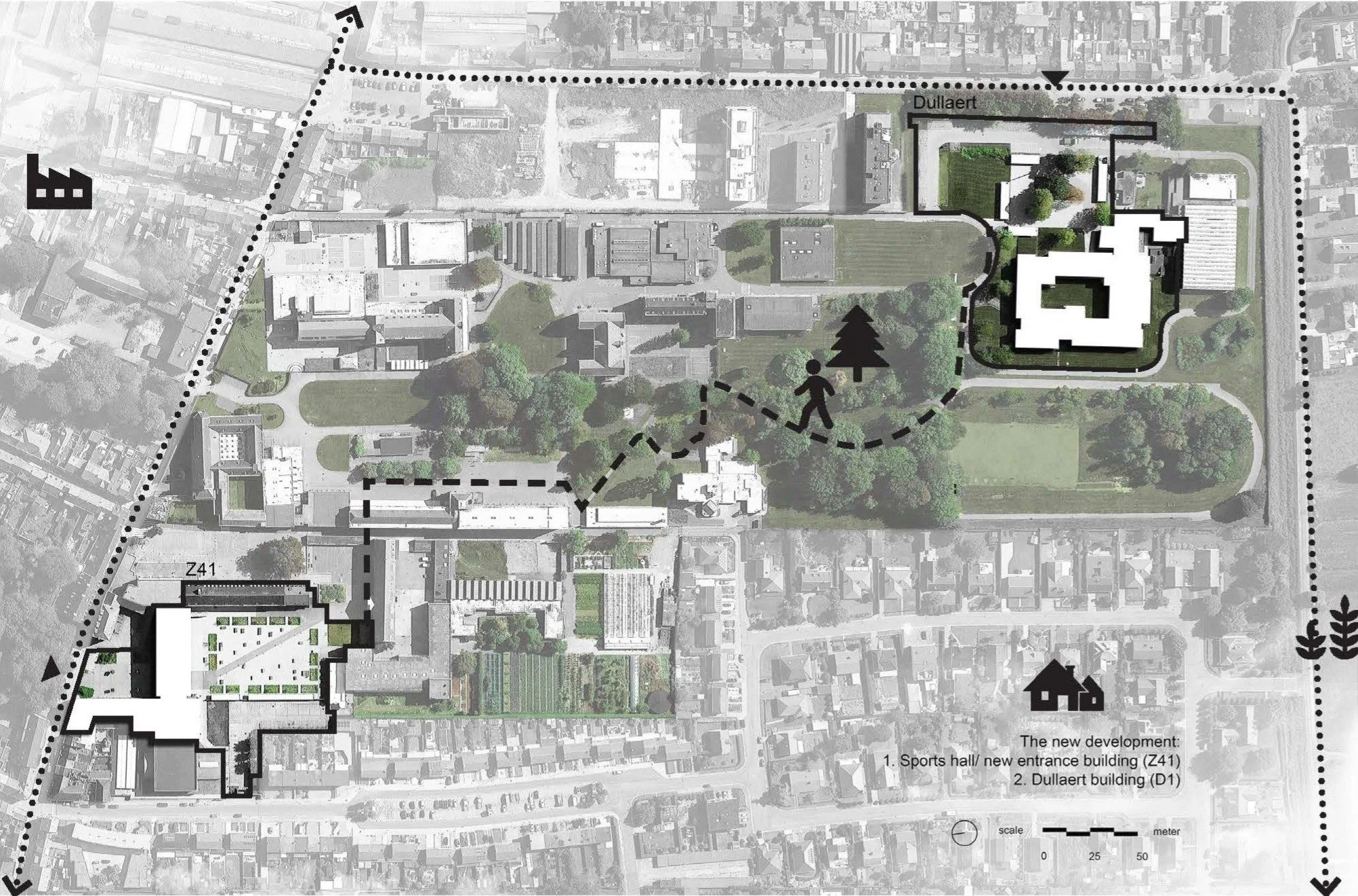
A rather large school project which consists of a masterplan for the entire campus; demolition of several historical buildings; a refurbishment of a 70s building and a new school building.
Project School
Client
AG-RE
Location
Eeklo, BE
Area
10,700 m²
Type winning competition
Building
€ 15,4M
Team SMAK Architects, VHH architects,
Delta Consulting, Tecon, Bureau Bouwtechniek
Timing Finished in 2020
“It is a school in a park ”
Masterplan
Project 'College Onze-Lieve-Vrouw ten Doorn' in Eeklo, East Flanders, is a winning design in the 'Schools of Tomorrow' competition. Antwerp-based SMAK Architects collaborated with London-based VHH, an agency renowned for having many large English schools in their portfolio. The project on this exceptional location is a combination of selective demolition, new construction and renovation.
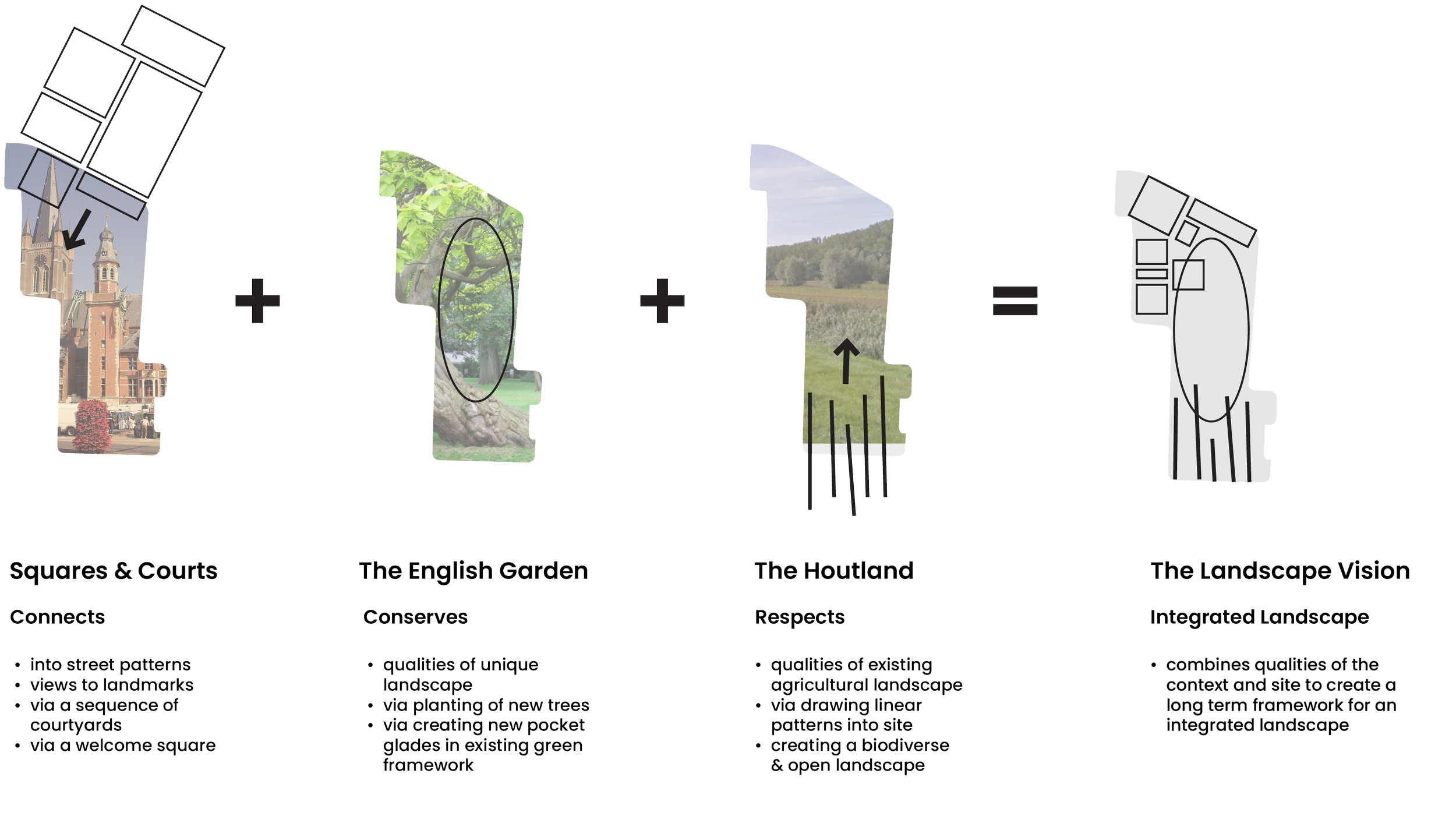
The College O.-L.-V.-ten-Doorn site consists of a series of long, narrow garden plots, extending over no less than 5.5 hectares. The domain stretches from the original church and monastery buildings in the city centre through several grounds, all the way to the outskirts of the city and the adjacent meadows of ‘Meetjesland’. Few schools have such a park. A number of parts of the former English gardens of the monastery are still intact.


Landscape concept
The architects developed a master plan for a long-term vision, inspired by the original garden design and adapted to current and future needs. An extensive landscape design and reorganisation of the buildings rehabilitate the patrimony to its former glory and unite the individual parts into coherent totality. The separate environments of general secondary and vocational education were abolished. Special challenges included the protected status of some of the buildings: some of them were renovated, others demolished.
The space inbetween
The school itself grew steadily over the years, due to the merger of four Catholic secondary schools: boys and girls, vocational and academic education. The mergers led to an ad hoc amalgamation of land and buildings, resulting in a campus with little identity of its own. The buildings and courtyards of the former 'vocational schools' could best be described as gloomy.
The courtyards themselves were therefore also scrutinized and improved.
Second intervention
During a second intervention, the existing school 'Dullaert' was completely stripped down and converted into a new college. The new building acquired a clear entrance with an awning and its own entrance square.
The sports hall
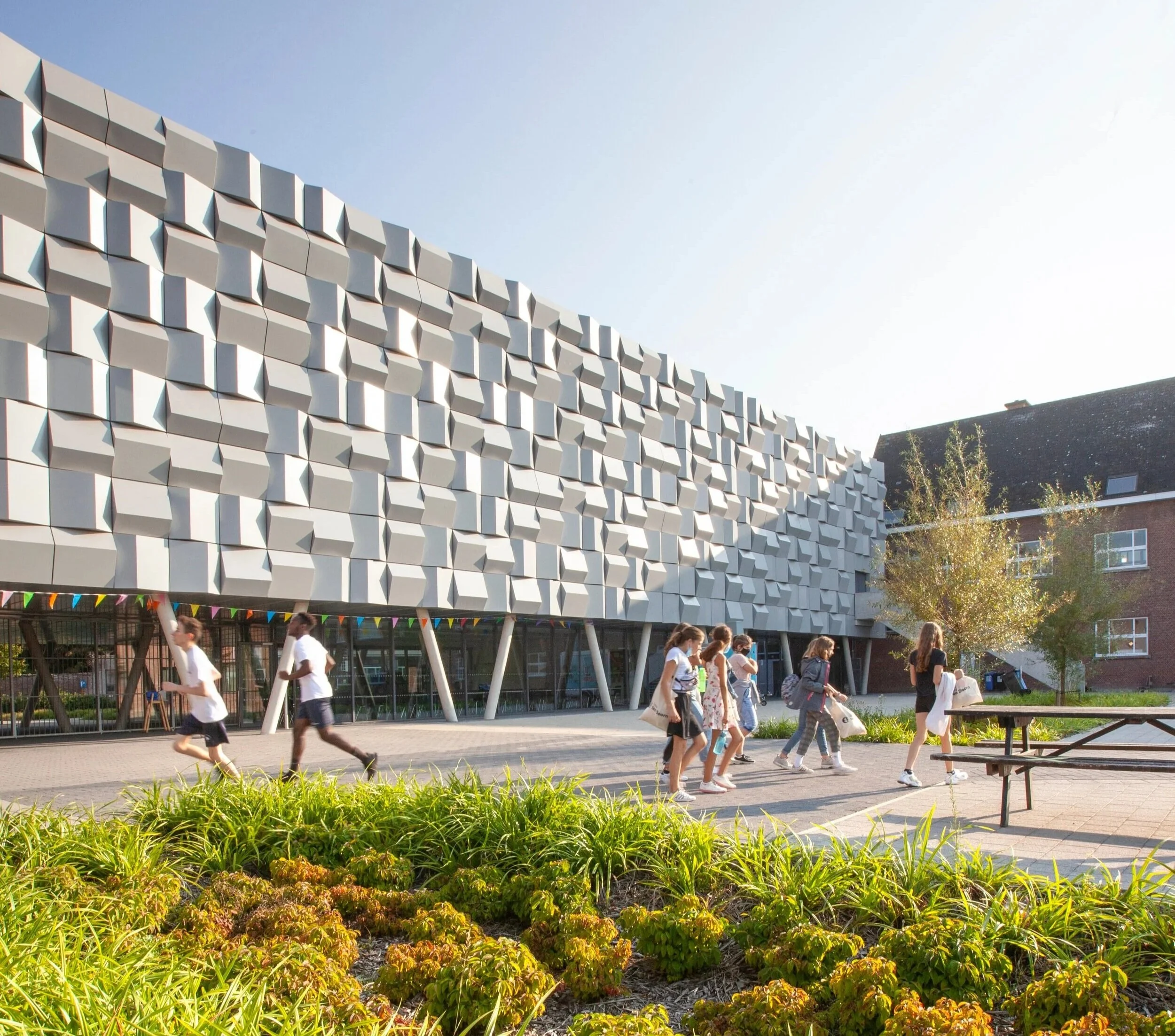
A first important intervention was the intelligent establishment of a new sports hall. This created an entrance plaza for the entire campus. The distinctive facade is built with aluminium composite cassettes that were fixed to the vertical battens. They give the school a contemporary identity with a striking entrance, that provides access to the rest of the restored site. The landscape design was fundamental for this result too. It conserved valuable passage, but improved the spaces in between and the routes on the site, providing a more natural connection between the school and the city.