Quellinstraat 48-52
Between the Central Station, the Frankrijklei and the City Park (Stadspark), project Quellin is being developed, with 55 student rooms and 4 studios. The ground floor accomodates an office/retail space that connects to the urban, commercial street-plinth. A passageway provides access to the garden, which serves as a collective green outdoor space and offers added quality for both residents and office workers.
Project Student accommodation, office,
commercial space
Location
Antwerp, BE
Team SMAK Architects
Studie 10
Buro Buiten
Status Permit granted
Area 2,559 m²
Type Commission
Client
03 Shift Development
Designed with an eye for detail
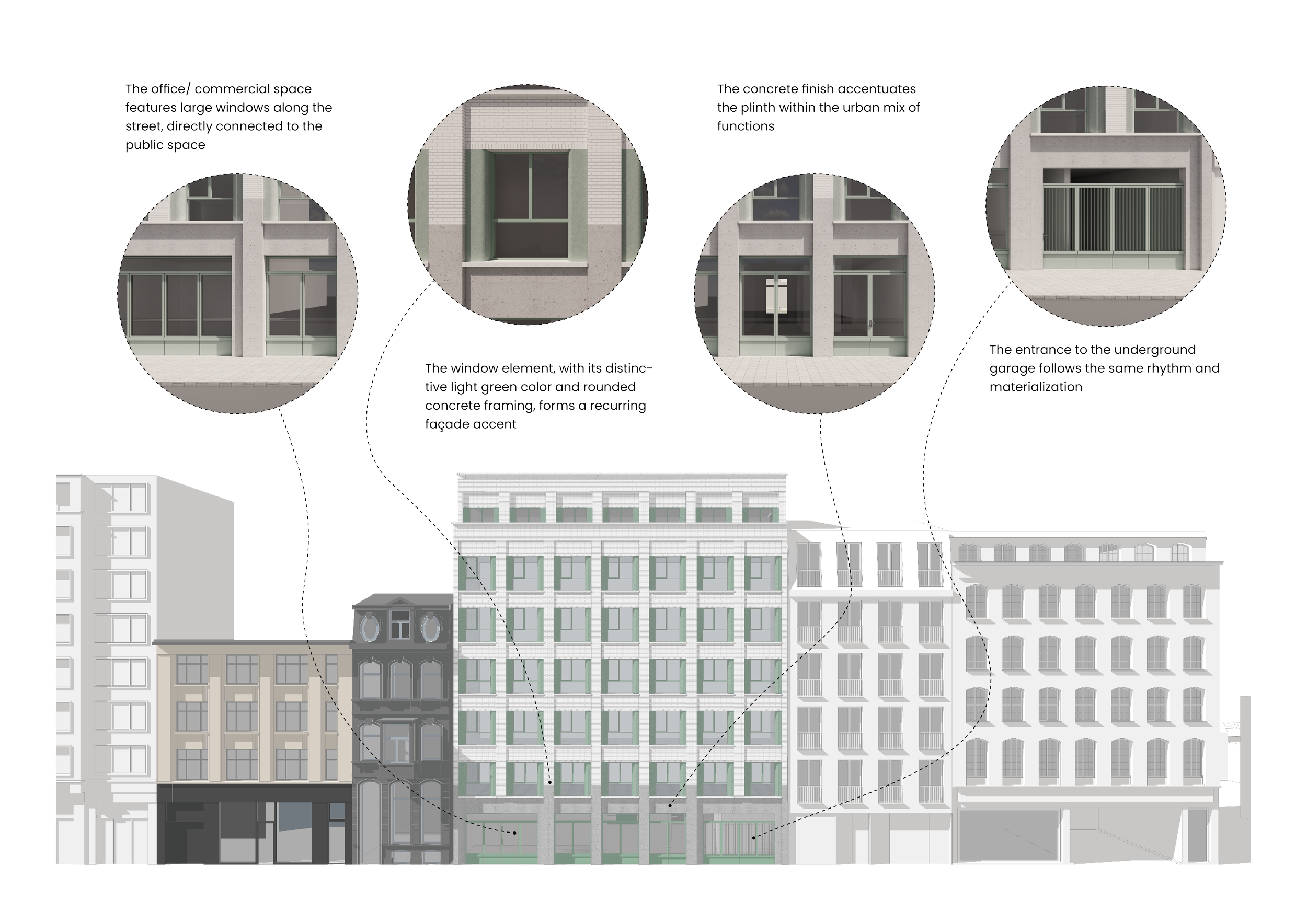
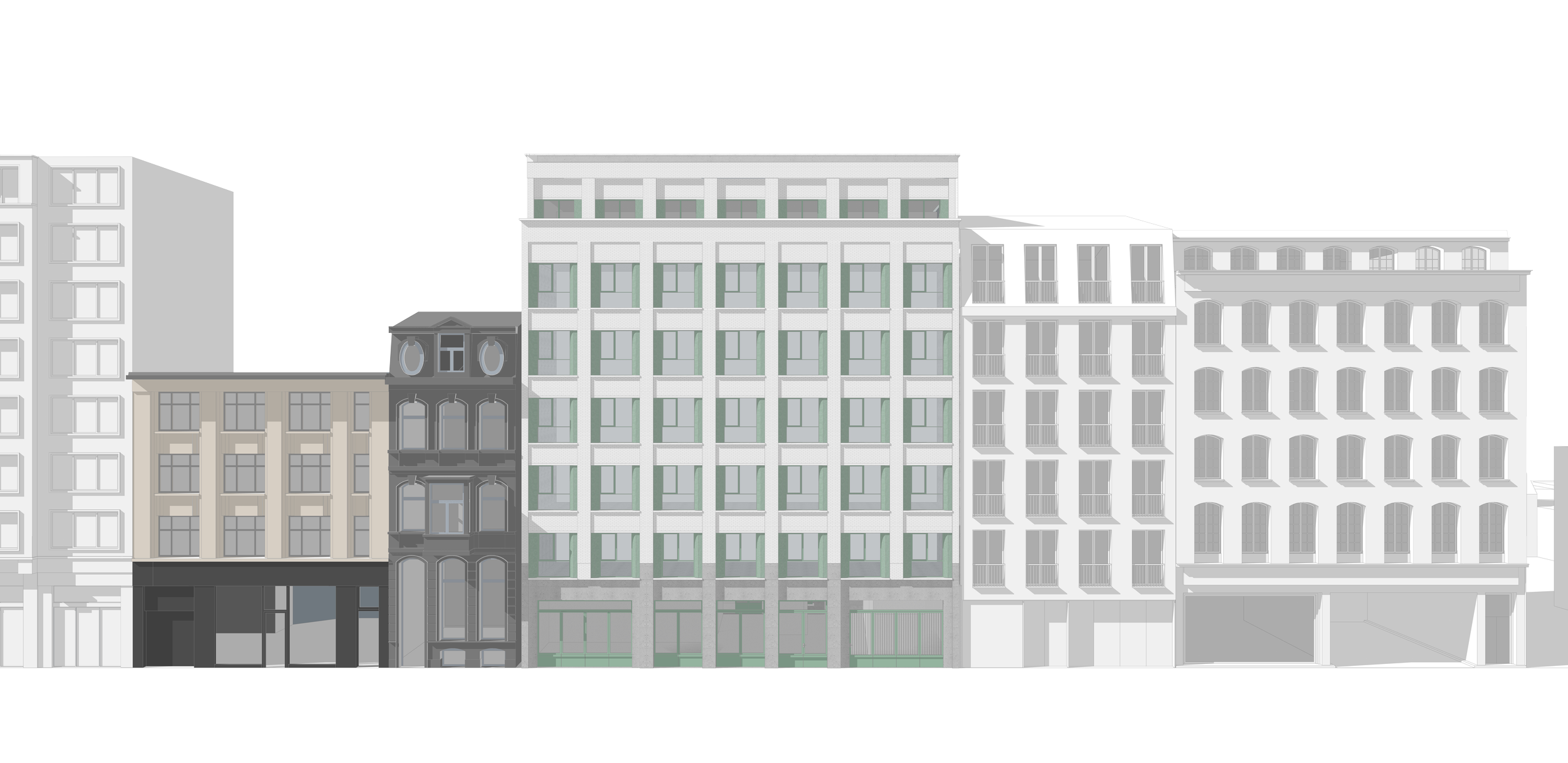
The facade, built up according to a fixed module, allows a future reinterpretation of the program without being tailored to any single function. Its articulation anticipates the scale of the immediate surroundings: residential buildings with a mineral plinth, classical window divisions with distinctive framing and decorative cornices. Continuous pilasters reinforce the verticality of the volume. The window elements, with a characteristic light green colour and their rounded concrete frame form a recurring facade accent.
Design process
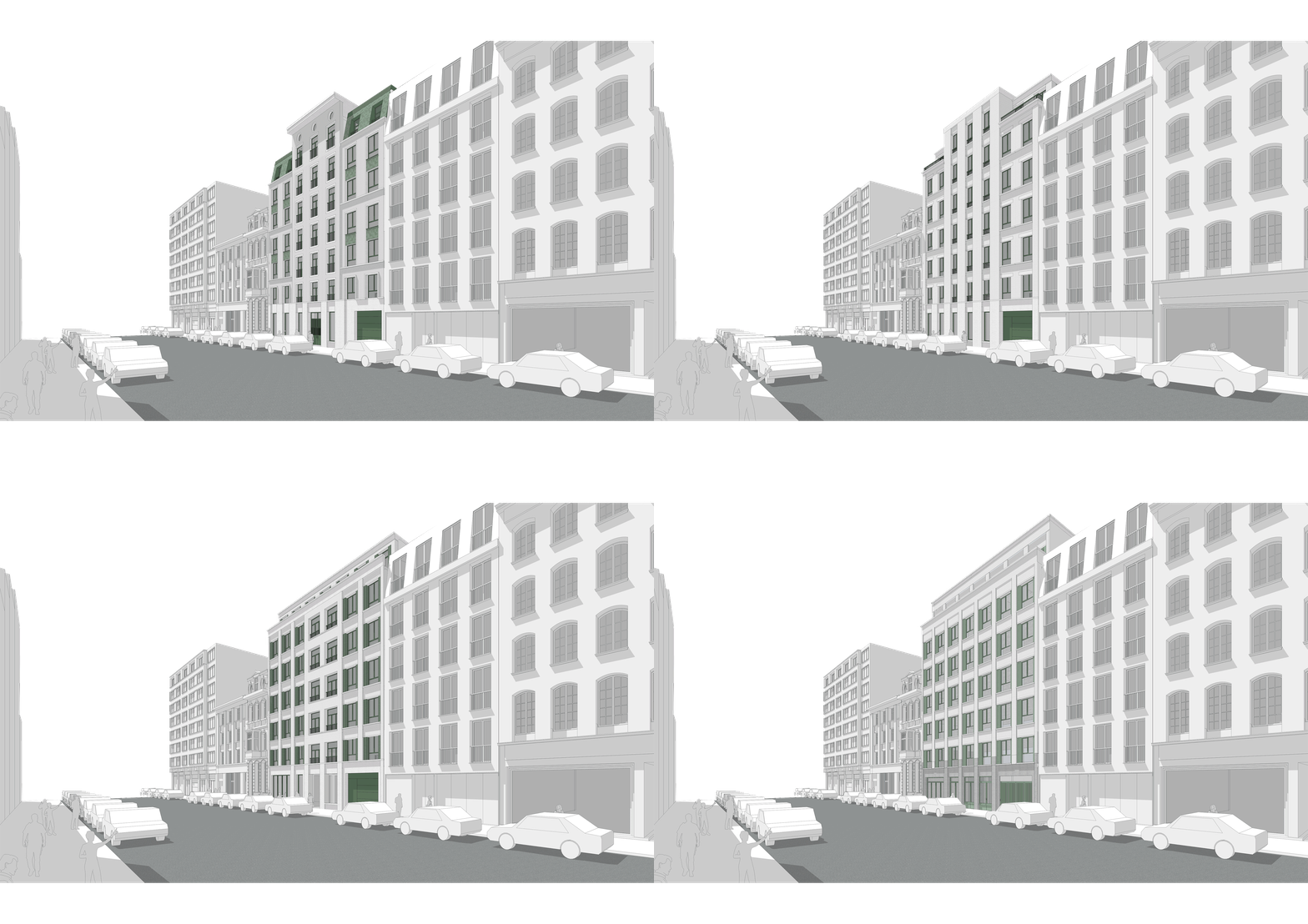
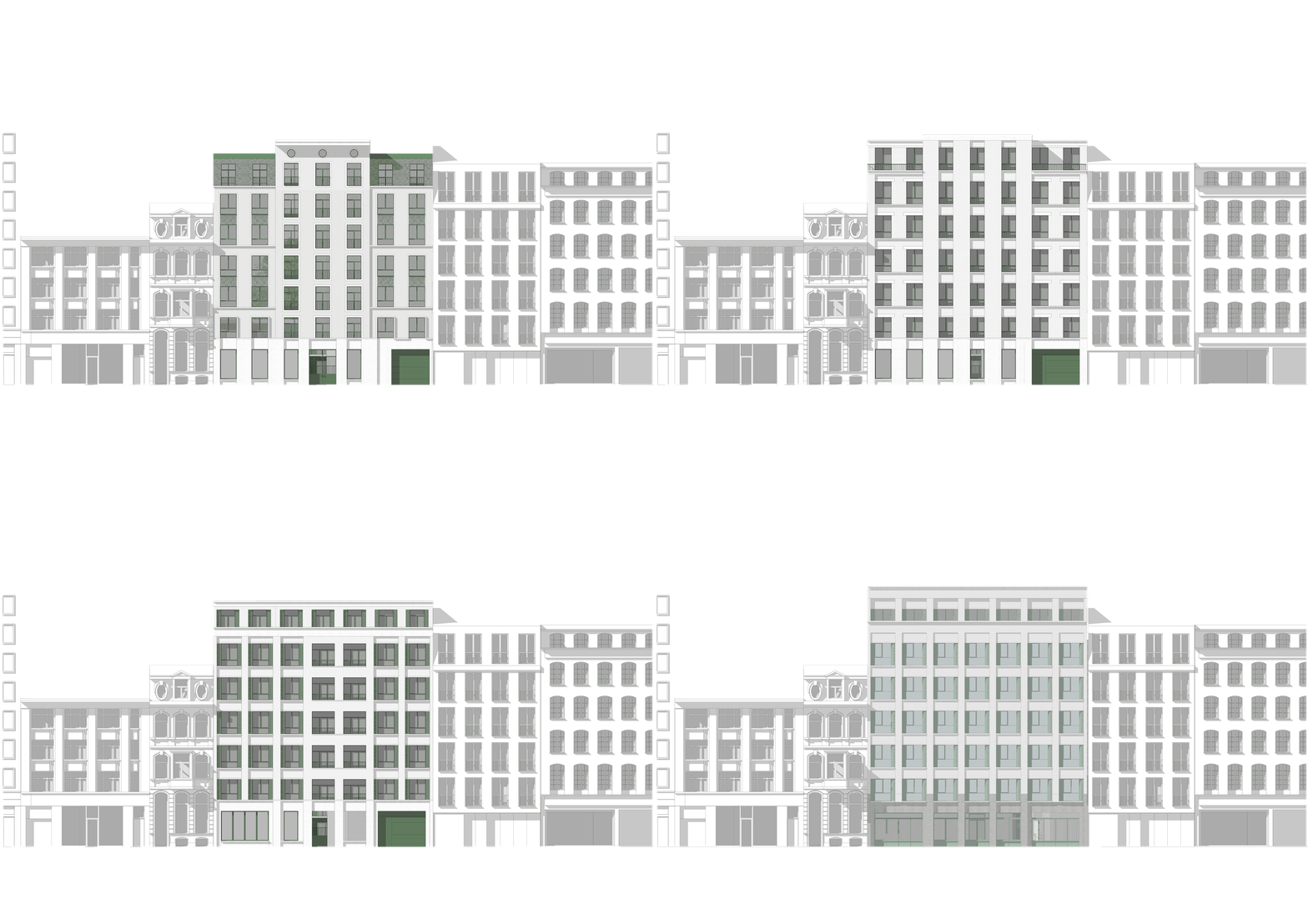
The facade design, the result of an iterative process with the city architect (kwaliteitskamer), aims to express the character of the context while remaining faithful to the structural concept.
The ground floor, higher than the upper levels, is conceived as a bel étage. To fit into a mixed urban program of functions, the office/commercial space is provided with large windows along the street, directly connected to the public realm. A shared entrance and underpass give access to the garden and bicycle storage, as well as the entrance to the parking garage. By choosing an exposed concrete facade, we have accentuated the plinth, in contrast with the brick architecture above.
Site
The site is being intentionally de-paved: the outdoor area is being doubled and will from now on cover about one third of the total plot. The green zone is designed as a collective garden accessible to all users of the building. In this way, it not only adds value for the new residents, but also brings breathing space into an otherwise very densely built-up and paved city block.


Flexibility
The student housing units are functionally stacked on top of the plinth and follow a simple and rational floor plan. A logical choice of structural load-bearing lines allows for functional adaptability, enabling the project to respond to changing housing needs. The structure is designed with large spans between the front and rear facades and the central corridor zone. Since the infill consists of non-load-bearing elements, various residential typologies are possible, ranging from (student)rooms and studios to floor-through apartments.